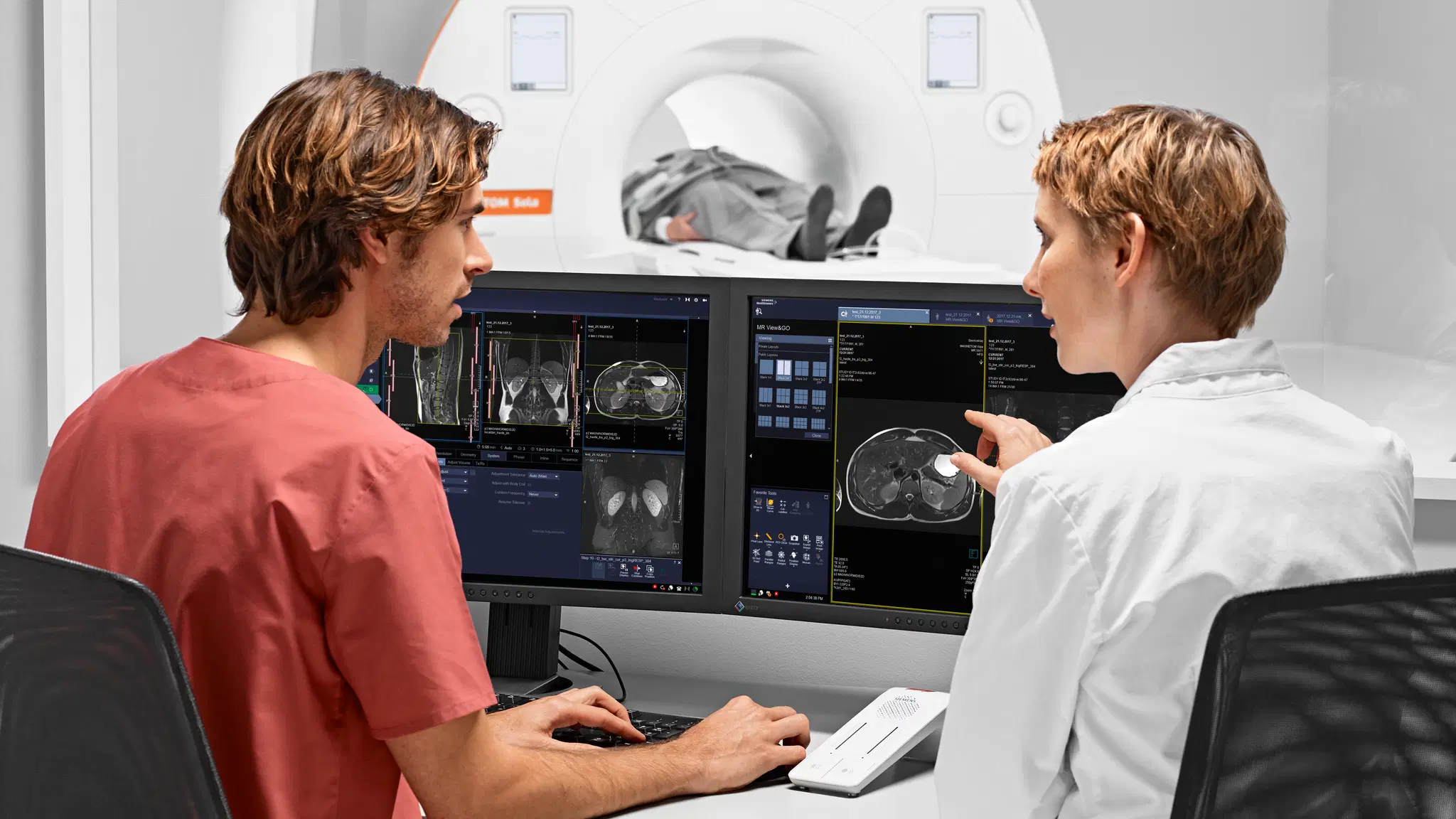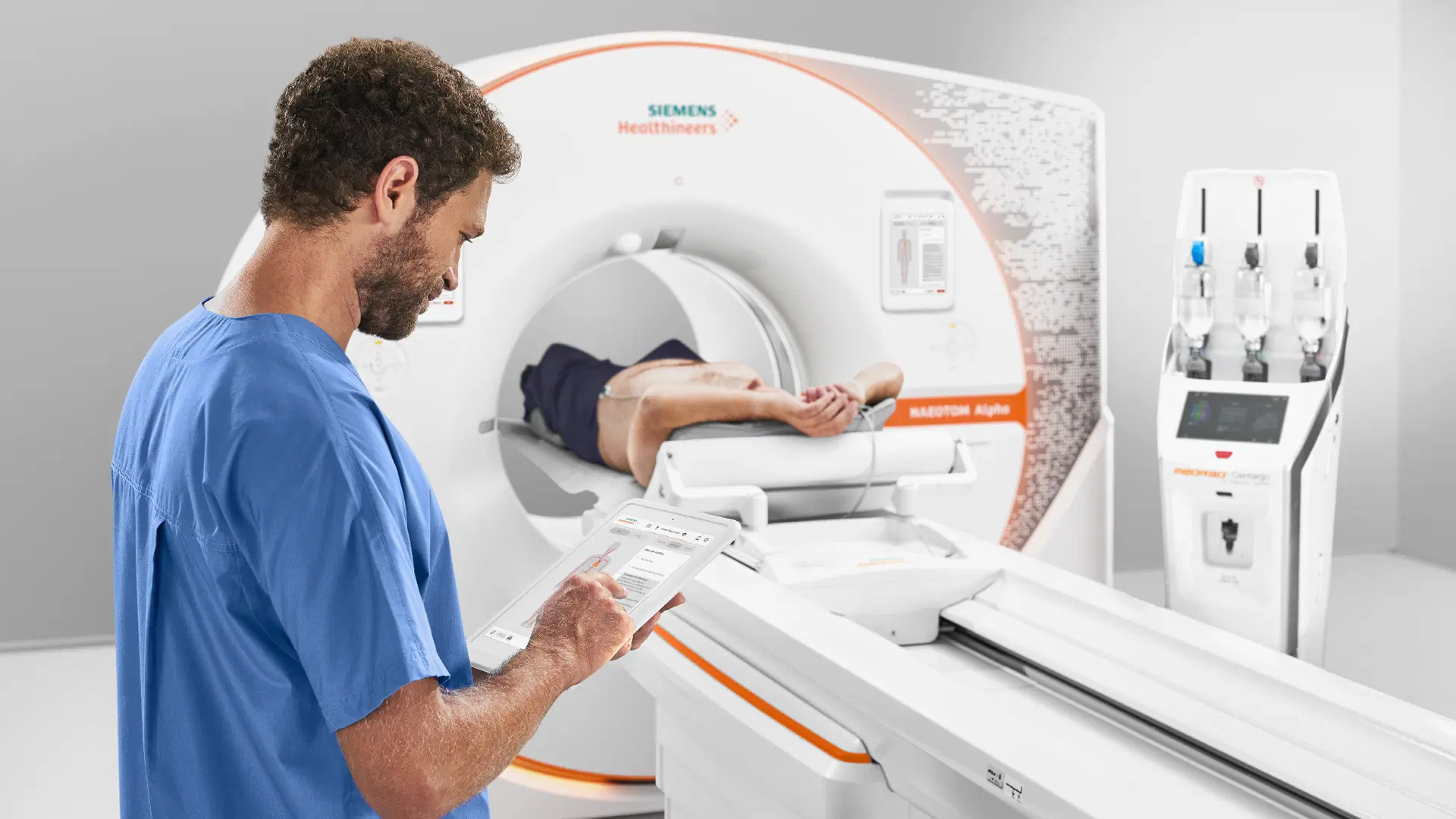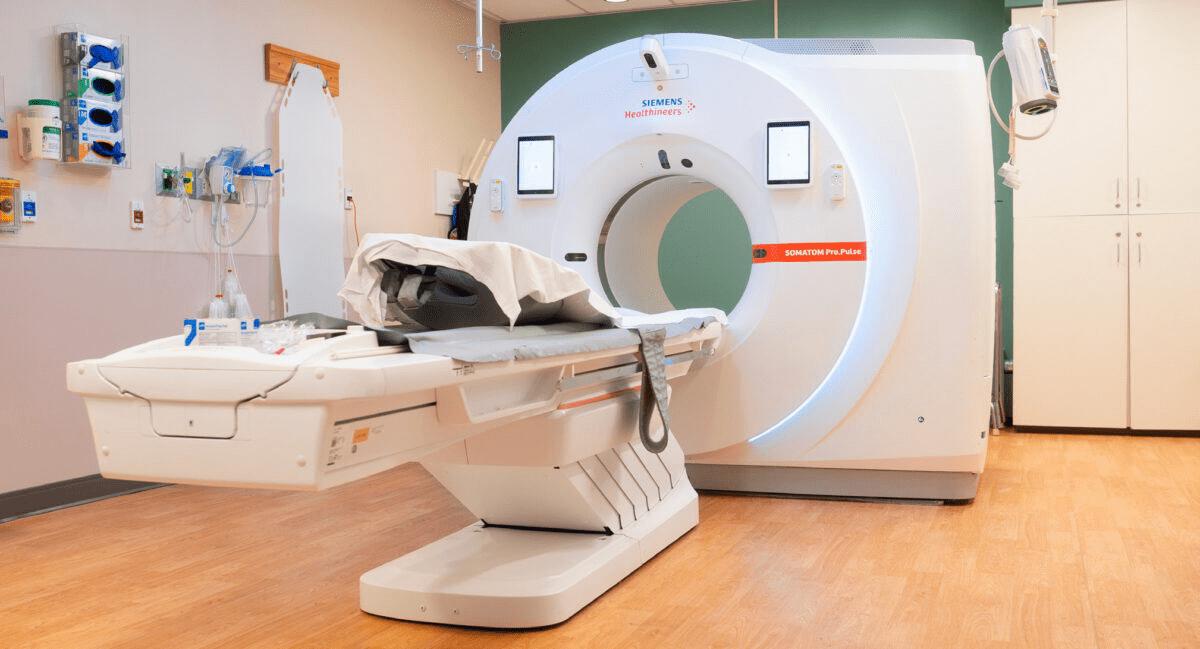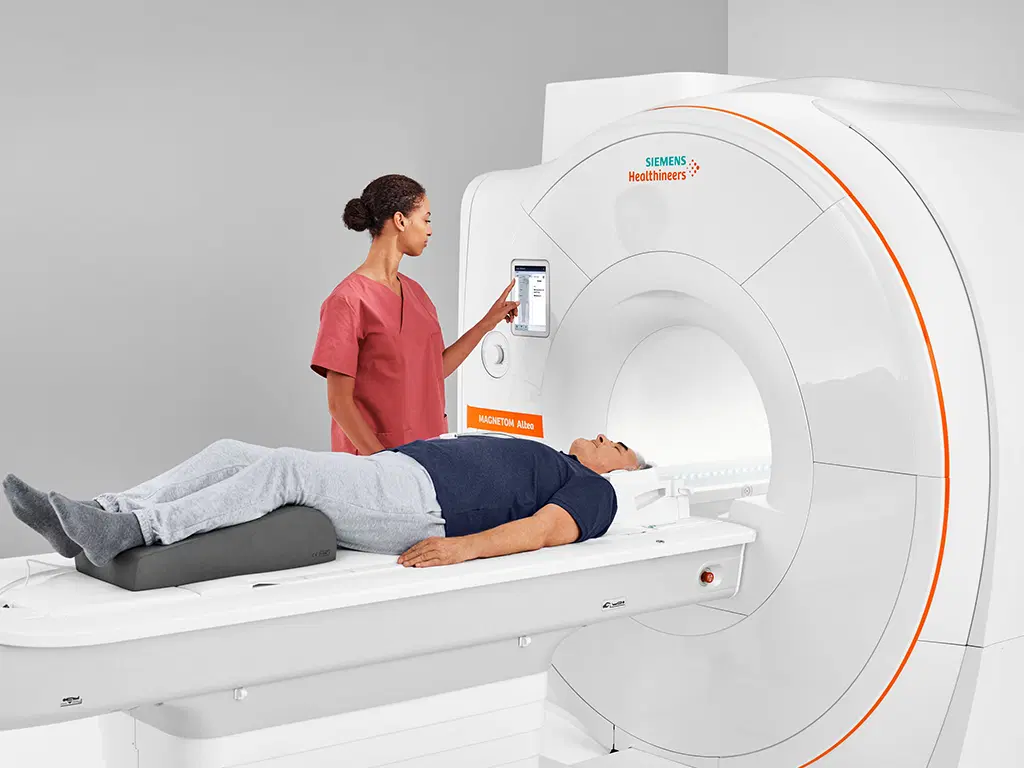

A new 1.5T MRI system is a significant capital investment for any radiology department. Although several MAGNETOM systems in the Siemens Healthineers MRI lineup share the same field strength, their differences in workflow, configuration, siting, and long-term ownership can materially affect which system is right for a facility.
This comparison examines three Siemens Healthineers MRI machine models at 1.5T: the MAGNETOM Sola, MAGNETOM Altea, and MAGNETOM Flow. Platform. It outlines the clinical, operational, infrastructure, and financial considerations that distinguish each system.
Centella, a Siemens Healthineers Advanced Partner and the exclusive seller of Siemens Healthineers equipment in South Florida, helps healthcare providers evaluate each system against their clinical requirements, workflow, site conditions, and long-term objectives.
Selected Siemens MRI Machine Models at a Glance
The broader Siemens Healthineers MRI portfolio includes systems across multiple field strengths, including:
- 0.55T MAGNETOM Free.Max
- 1.5T MAGNETOM Flow. Platform
- 1.5T MAGNETOM Altea
- 1.5T MAGNETOM Sola
- 3T MAGNETOM Lumina
- 3T MAGNETOM Vida
This article focuses on three 1.5T options that facilities may evaluate when planning a new MRI purchase: the MAGNETOM Sola, Altea, and Flow. Platform. These three represent the 1.5T systems that a facility is most likely to weigh side by side when planning a new purchase. They share the same field strength but take different approaches to configuration, magnet technology, and siting.
Although these systems share a 1.5T field strength, they differ in workflow capabilities, magnet technology, available configurations, and siting requirements. BioMatrix, a suite of sensor- and workflow-based hardware technologies, and Deep Resolve, a deep-learning image reconstruction technology, are available across these systems. But the exact components, applications, and packages vary by model and configuration.
| Model | Field Strength | Bore | Helium Technology | Siting and Infrastructure | Key Imaging Technologies |
| MAGNETOM Sola | 1.5T | 70 cm | Zero helium boil-off | Conventional siting with a quench pipe | BioMatrix Technology, Deep Resolve |
| MAGNETOM Altea | 1.5T | 70 cm | Zero helium boil-off | Conventional siting with a quench pipe | BioMatrix Technology, Deep Resolve |
| MAGNETOM Flow.Ace | 1.5T | 60 cm | Sealed DryCool magnet using 0.7 liters of helium | Quench-pipe-free, compact siting | BioMatrix Technology, Deep Resolve |
| MAGNETOM Flow.Platform | 1.5T | 70 cm | Sealed DryCool magnet using 0.7 liters of helium | Quench-pipe-free, compact siting | BioMatrix Technology, Deep Resolve |
MAGNETOM Sola and Altea Zero-Boil off 1.5T Systems
The MAGNETOM Sola and MAGNETOM Altea share several core specifications, including 1.5T field strength, a 70 cm Open Bore, BioMatrix Technology, Deep Resolve capabilities, and zero helium boil-off technology designed to minimize routine helium loss.
However, the systems are not identical. For the MAGENTOM Sola and the MAGNETOM Altea, the coils, clinical applications, and software are largely the same. The primary difference is gradient coil strength, along with the available configurations.
Because the core capabilities and 70 cm bore are the same, the decision most often comes down to the gradient performance a department needs, budget, and total cost of ownership. A facility should evaluate the complete proposed configuration rather than field strength or bore size alone.
A Centella account executive can help review those requirements and determine which system configuration best aligns with the department’s daily workflow and long-term plans.
MAGNETOM Flow. Platform:
The MAGNETOM Flow. Platform maintains a 1.5T field strength while taking a different approach to magnet design and facility infrastructure.
The systems use a sealed DryCool magnet containing 0.7 liters of helium for the life of the magnet. This design eliminates the need for a quench pipe, reducing one of the major infrastructure requirements associated with conventional MRI siting.
System weight is another infrastructure factor, since floor loading and structural capacity can affect where a system may be installed. Together, these differences in quench-pipe requirements, weight, and construction can influence the total cost of ownership over the life of the system.
The Flow. Platform includes two bore configurations:
- MAGNETOM Flow.Platform with a 60 cm bore
- MAGNETOM Flow.Platform with a 70 cm bore
Its compact design can expand the range of spaces that may be considered for MRI installation, particularly where the routing or construction of a traditional quench pipe presents a challenge.
BioMatrix Technology and Deep Resolve capabilities are also available across the MAGNETOM Flow. Platform. However, facilities should compare the exact software, coil, gradient, and clinical application configuration proposed for each system.
Helium, Quench Pipes, and Siting: Why Magnet Design Matters
Magnet design can affect siting, infrastructure requirements, and long-term operating considerations.
The MAGNETOM Sola and MAGNETOM Altea use zero helium boil-off technology designed to minimize routine helium loss. Both systems rely on conventional magnet infrastructure and require a quench pipe.
A quench is a rare event in which the magnet loses superconductivity and releases helium gas. The quench pipe is designed to vent that gas safely outside the building. Accommodating it may require structural planning, exterior access, and coordination with the facility’s architects, engineers, and contractors.
The MAGNETOM Flow. Platform uses a sealed, low-helium magnet that eliminates the quench-pipe requirement.
These infrastructure differences can affect total cost of ownership through construction requirements, energy use, helium-related considerations, and long-term service needs.
The magnet is therefore not only a technical component of the system. It can directly influence where the system can be installed, how the project is designed, and what the facility may need to support throughout the equipment’s lifecycle.
Shared Imaging Technologies: BioMatrix and Deep Resolve
The MAGNETOM Sola, Altea, and Flow. Platform offer advanced Siemens Healthineers imaging and workflow technologies, but their capabilities and available configurations are not identical.
BioMatrix Technology uses sensors, tuners, interfaces, and adaptive workflow capabilities to account for patient and exam variability. Depending on the system and configuration, these capabilities can support more consistent positioning, patient preparation, and scanning workflows.
Deep Resolve applies deep-learning image reconstruction to support image quality and acquisition efficiency, delivering up to a 73% boost in scan speed with high-resolution MRI.
Although BioMatrix and Deep Resolve capabilities are available across these systems, facilities should confirm which components, applications, and packages are included in each proposed configuration. Features may be standard, optional, or dependent on the selected system package.
How to Choose the Right 1.5T MRI for Your Facility
The right 1.5T system depends on more than a single specification. Facilities should consider the following factors together.
- Clinical applications: Identify the specialties, exam types, and patient populations the system must support. The required software, coils, gradients, and clinical applications should be defined before comparing configurations.
- Workflow and throughput: Consider current and projected exam volume, staffing, scheduling requirements, patient preparation, positioning, and the department’s broader workflow.
- Siting and infrastructure: Evaluate the space, structural conditions, system weight and floor loading, electrical capacity, cooling requirements, access routes, and other building conditions that may affect installation.
- Quench-pipe requirements: Determine whether the facility can accommodate the routing, construction, and infrastructure requirements of a quench pipe. Where that presents a challenge, the MAGNETOM Flow. Platform sealed magnet may provide additional siting flexibility.
- Bore size and patient access: Consider the needs of claustrophobic, anxious, pediatric, bariatric, or mobility-limited patients, as well as the clinical applications the system must support.
- Budget: Compare the full proposed configuration rather than the base system price alone. Software, coils, construction, service coverage, and other project requirements can materially affect the total investment.
- Total cost of ownership: Evaluate construction, energy use, helium-related requirements, service coverage, uptime expectations, and anticipated lifecycle costs.
Centella’s account executives and project management team help facilities evaluate these factors, select the appropriate Siemens Healthineers system, and coordinate the project from planning through installation and service handoff.
If none of these 1.5T options align with the facility’s clinical requirements, a detailed field strength comparison may help determine whether another system is more appropriate.
Frequently Asked Questions About Siemens MRI Machine Models
What are the main Siemens Healthineers MRI machine models?
The Siemens Healthineers MRI portfolio includes systems across several field strengths. This article focuses on the 1.5T MAGNETOM Sola, MAGNETOM Altea, and MAGNETOM Flow. Platform. Other systems include the 0.55T MAGNETOM Free.Max, the 3T MAGNETOM Lumina, and the 3T MAGNETOM Vida.
What is the difference between the MAGNETOM Sola and MAGNETOM Altea?
The MAGNETOM Sola and MAGNETOM Altea share several core specifications, including 1.5T field strength, a 70 cm Open Bore, BioMatrix Technology, Deep Resolve capabilities, and zero helium boil-off technology. The coils, clinical applications, and software are largely the same. The primary difference is gradient coil strength, along with the available configurations. The decision usually comes down to gradient performance, budget, and total cost of ownership.
How is the MAGNETOM.Flow Platform different from the MAGNETOM Sola and MAGNETOM Altea?
The MAGNETOM Flow. Platform uses a sealed DryCool magnet containing 0.7 liters of helium and does not require a quench pipe. The MAGNETOM Sola and the MAGNETOM Altea use conventional magnet infrastructure with zero helium boil-off technology and require a quench pipe. The MAGNETOM Flow. Platform may therefore offer greater flexibility for sites where space or infrastructure presents a challenge.
How is the MAGNETOM Flow. Platform different from the MAGNETOM Free.Max?
The MAGNETOM Flow. Platform operates at 1.5T and includes 60 cm and 70 cm systems.
The MAGNETOM Free.Max is a 0.55T system with an 80 cm bore. Its wider bore and lower-field design are intended to expand access and improve comfort for patients who may experience claustrophobia, anxiety, or challenges related to body size or positioning.
The lower-field 0.55T MAGNETOM Free.Max design also produces fewer metal-induced distortion artifacts and lowers safety risks such as tissue heating for patients with metal implants, compared with high-field 1.5T or 3T systems.
Do these systems still require helium?
The MAGNETOM Sola and MAGNETOM Altea keep a full helium charge but use zero boil-off technology to limit routine loss. The MAGNETOM Flow. Platform relies on a sealed, low-helium DryCool magnet with 0.7 liter of helium, that needs no refills.
What is a quench pipe, and why does it matter for MRI siting?
A quench is a rare event in which the magnet loses superconductivity and releases helium gas. A quench pipe vents that gas safely outside the building. Accommodating a quench pipe can affect room design, structural planning, construction, and installation costs. The MAGNETOM Flow. Platform sealed magnet eliminates this requirement.
What are BioMatrix and Deep Resolve?
BioMatrix Technology includes adaptive technologies designed to account for patient and exam variability throughout the MRI workflow. Deep Resolve is a deep-learning reconstruction technology that sharpens image quality while enabling shorter exams, with Siemens Healthineers reporting scan speeds up to 73% faster on high-resolution MRI. The exact capabilities included should be confirmed for each system and configuration.
How do I choose the right 1.5T MRI for my facility?
Consider clinical applications, patient population, throughput goals, staffing, siting conditions, infrastructure, bore size, budget, service requirements, and long-term ownership costs. A Centella account executive can help map these requirements to the appropriate Siemens Healthineers system and configuration.
What bore sizes do these systems offer?
The MAGNETOM Sola and MAGNETOM Altea offer a 70 cm. The MAGNETOM Flow. Platform includes 60 cm and 70 cm bore sizes. Current availability and configuration options should be confirmed with a Centella account executive.
How do I get pricing for a Siemens Healthineers MRI system?
Pricing depends on the selected system, software, coils, clinical applications, site conditions, construction requirements, and service plan.
Request a quote or technology assessment from a Centella account executive to evaluate the complete project scope. A technology assessment reviews both the software needs and the hardware needs. On the software side, that means clinical applications and AI-based tools such as Deep Resolve. On the hardware side, it covers gradient strength, magnet and helium-free technology, and quench-pipe requirements. It also weighs whether a 1.5T or a different field strength best fits the facility.
The Bottom Line
The MAGNETOM Sola, MAGNETOM Altea, and MAGNETOM Flow. Platform each provide a 1.5T MRI option, but they should not be evaluated as interchangeable systems.
Keep these distinctions in view:
- MAGNETOM Sola and MAGNETOM Altea: Both offer 1.5T field strength, a 70 cm Open Bore, zero helium boil-off technology, and access to BioMatrix and Deep Resolve capabilities. The decision should be based on the specific workflow, software, gradient, coil, and clinical application configuration required.
- MAGNETOM Flow. Platform : The MAGNETOM Flow. Platform combines 1.5T field strength with a sealed, low-helium DryCool magnet and quench-pipe-free siting. They may be particularly relevant where space or infrastructure constraints affect the project.
- Imaging and workflow capabilities: Advanced technologies are available across the systems, but the exact components and packages are not identical. Compare the complete proposed configuration.
- Total cost of ownership: Consider construction, infrastructure, energy use, helium-related requirements, service coverage, and lifecycle costs rather than focusing only on the initial purchase price.
Match an MRI System to Your Facility
The right system depends on the facility’s clinical applications, patient population, throughput goals, building conditions, budget, and long-term operating priorities.
Talk to a Centella account executive about comparing Siemens Healthineers MRI systems or request an assessment to plan the project from initial evaluation through installation and service handoff.