
When an MRI coil fails, the decision your team makes in the next 24 hours carries real operational and financial weight. Scans are rescheduled, workflows stall, and revenue exposure climbs by $15,000 in daily scanning revenue for every day a system sits offline. The MRI coil repair question surfaces. The more important question is what the right call looks like for your department, your imaging platform, and your capital plan over the next 12 to 36 months.
Repair has a place. For most hospital systems and academic medical centers, however, the smarter long-term path is a planned replacement strategy that eliminates the repair cycle and aligns coil decisions with your broader equipment lifecycle. As a Siemens Healthineers Advanced Partner, Centella works alongside imaging programs across South Florida as an equipment solutions partner. Choosing an MRI service company built for that kind of lifecycle planning is the difference between reactive spend and a coil fleet built to support your imaging program for years.
How MRI Coils Work
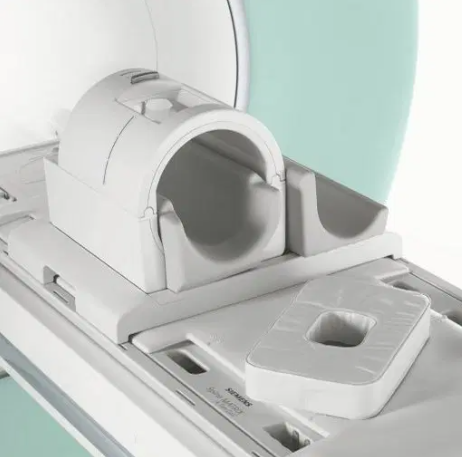
MRI coils transmit radiofrequency pulses into a patient’s body and receive the return signals that form the diagnostic images. Transmit coils broadcast radiofrequency energy into the target anatomy. Receive coils capture the returning signal and convert it into image data.
Your coil channel count directly determines spatial resolution and signal quality. Most modern systems place dedicated receiving coils close to the anatomical target to maximize that signal. A 32-channel head coil on a 3T system, for example, produces substantially sharper neuroimaging than an 8-channel version on the same platform. Coil health is the foundation of every diagnostic read.
According to research on radiology equipment performance, coil designs are organized by anatomical region. Common coil types include:
- Head and brain: Neurology, oncology, and stroke protocols rely on these coils for the resolution your clinicians need.
- Spine: Lumbar configurations support detailed disc and cord imaging with high-channel array performance.
- Breast: Bilateral phased-array coils deliver the sensitivity your screening and staging protocols require.
- Body and torso: Large-aperture configurations match the field coverage and SNR that your abdominal, pelvic, and cardiac sequences demand.
MRI coils function across the full field-strength spectrum, from 0.55T open-bore systems used in interventional suites through 1.5T and 3T clinical workhorses to 7T research platforms at academic medical centers. Whatever the platform, coil performance is a critical factor in image quality, artifact reduction, and diagnostic reliability. A clear understanding of your coil fleet positions your clinical engineering team to identify degradation early and plan replacements on your terms.
Warning Signs of MRI Coil Failure
MRI machines have a typical replacement cycle around 10 years, with upgrade and refurbishment strategies extending useful life further. Coils typically show degradation well before the scanner itself. Recognizing early signs of failure gives your team the lead time to schedule a replacement proactively rather than respond to an unplanned outage. Visible physical damage and measurable changes in image output are the two primary indicators to monitor. Visual inspections for safety and planned maintenance, paired with regular quality assurance testing, are a reliable way to stay ahead of both.
Physical Signs of MRI Coil Damage
A thorough physical inspection is a reliable first step toward an accurate assessment. Cracked or warped housing signals early structural problems worth addressing promptly. Bent or corroded connector pins and deformed foam padding inside the coil shell can indicate impact damage to internal wiring. Coil damage that appears cosmetic may mask underlying electrical faults. Contact your original equipment manufacturer (OEM) service provider for a structured evaluation that separates cosmetic damage from underlying electrical faults.
Photograph visible defects with a date stamp and log them in your service record. A well-maintained damage log supports warranty and service agreement claims, and it becomes the baseline your service partner relies on when evaluating whether a coil is operating within spec or due for replacement.
Performance Indicators of Coil Failure
Image quality is your first reliable signal that a coil is degrading. Signal dropout in specific channels and uneven shading across your field of view are consistent indicators. A measurable decline in signal-to-noise ratio (SNR) during routine quality assurance checks confirms those concerns with objective data.
Intermittent connection errors and changes in image quality are also worth tracking. When those patterns begin to appear together, it may indicate early signs of coil degradation. Contacting your equipment partner for an evaluation early can help prevent a manageable issue from escalating into a complete coil failure while also giving your department more time to plan for repair or replacement on your own schedule.
When MRI Coil Repair Is Commonly Considered
Cable and connector issues, cosmetic housing damage, and isolated single-channel electrical faults are the scenarios where facilities most commonly consider repair. On the surface, the logic holds. The damage appears contained, and a targeted fix seems faster and less expensive than sourcing a replacement coil. Many imaging programs default to repair simply because it feels like the lower-risk decision in the moment.
That perspective shifts when you look further down the timeline. A coil that has degraded enough to require service has already signaled that its most reliable years are behind it. Repairing one failure point does not reset the hardware’s overall condition, and a coil with prior service history carries a measurably higher risk of compounding failures in the months that follow.
Three factors deserve careful consideration before authorizing a repair:
- Recurring service costs on aging hardware. A single repair invoice is rarely the full picture. Coils that have been serviced once tend to return to the service queue, and each subsequent event adds parts, labor, and downtime to a hardware platform already on the back half of its useful life.
- Compatibility risk as systems evolve. Software updates, scanner upgrades, and changes to your MRI platform over the next several years can leave a repaired coil out of step with the system it was designed to support. Replacement gives you the chance to align coil specifications with where your imaging program is headed, not where it has been.
- Channel architecture limitations. Repair restores a coil to its original specifications, but those specifications cannot be upgraded through service. Facilities that repair an aging eight-channel coil are preserving yesterday’s resolution rather than positioning their neuroimaging or musculoskeletal protocols for what 32-channel architecture delivers today.
Across the industry, repair is occasionally pursued for a specific, isolated issue on a relatively young coil with no prior service history. For most imaging departments evaluating an aging coil with measurable performance decline, replacement holds up better against the financial, clinical, and operational pressures of the next 12 to 36 months, particularly for Siemens Healthineers platforms, where replacement is the standard path forward when a coil fails on safety or performance grounds.
When MRI Coil Replacement Makes More Sense
For academic medical centers, large IDNs, and regional hospital systems, replacement is the decision that protects your imaging program from the slow accumulation of service events, downtime, and operational uncertainty that comes with keeping degraded hardware in rotation. The case for replacement strengthens across several dimensions at once.
Lower Total Cost of Ownership
Every service event on an aging MRI coil carries a cost beyond the repair invoice. Scanner downtime, rescheduled patients, the administrative burden of managing an unpredictable failure pattern, and the revenue exposure tied to lost scan volume accumulate quickly across 12 to 18 months of continued use. When you model the full cost of a repaired coil over its remaining service life, against the cost of a planned replacement with predictable performance and a clean service history, replacement consistently delivers better value.
Alignment With Capital Planning
A planned coil replacement is a budgeted line item. An unplanned coil failure is not. Aligning coil replacements with your capital equipment budget cycle transforms a reactive expense into a strategic investment. Imaging departments that embed coil lifecycle management into their broader equipment strategy avoid emergency procurement, reduce unplanned downtime, and protect the predictability on which your operational planning depends.
Upgraded Channel Architecture
Higher-channel architectures are available through replacement rather than repair. Upgrading from an eight-channel to a 32-channel head coil on a 3T system gives your neuroimaging and research protocols access to resolution and SNR performance that repair cannot provide. The same logic applies across spine, breast, and body imaging, where modern phased-array configurations deliver clinical value that the original specifications cannot match. Replacement does not just solve a problem. It advances your imaging capability.
Eliminating the Repair Cycle
Each repair extends the life of a coil that is already on a declining curve. Replacement breaks the cycle entirely. Your department moves from managing a series of unpredictable service events to operating on a clean baseline, with a coil that has a defined service life ahead of it rather than behind it. That predictability matters for staffing, scheduling, and the patient experience your imaging program is built to deliver.
Working With an Authorized Siemens Healthineers Partner
Matching the right replacement coil to your MRI platform and clinical workflow requires OEM-level knowledge of your system compatibility. An authorized Siemens Healthineers Advanced Partner brings that precision to the conversation, including the system-specific knowledge that determines whether a replacement coil delivers its full performance potential on your scanner. Centella supports imaging programs across South Florida with the full range of radiology equipment and diagnostic imaging solutions your facility relies on.
Partnering With the Right Team for MRI Coil Decisions
Every coil failure is a decision point. Handled reactively, it becomes an unplanned expense. Handled strategically, it becomes an opportunity to advance your imaging program and align hardware decisions with your capital strategy.
Safety inspections, planned maintenance reviews, documented QA results, and an equipment solutions partner who knows your MRI fleet make the real difference in how often unplanned downtime disrupts your operations. Centella is a Siemens Healthineers Advanced Partner with decades of experience supporting hospitals and imaging centers across South Florida. Whether your team is weighing MRI coil repair or evaluating a planned replacement, a Centella account executive can walk through the right path forward.
Contact a Centella account executive to schedule a coil fleet evaluation or equipment consultation and keep your imaging program operating with the reliability your department depends on.